Positive Dog Training & Behaviour Blog | Walkabout Canine Consulting
Unleashing your dogs potential, one concept at a time
Sway Back in Dogs: What Lordosis May Mean
 Sylvia Koczerzuk
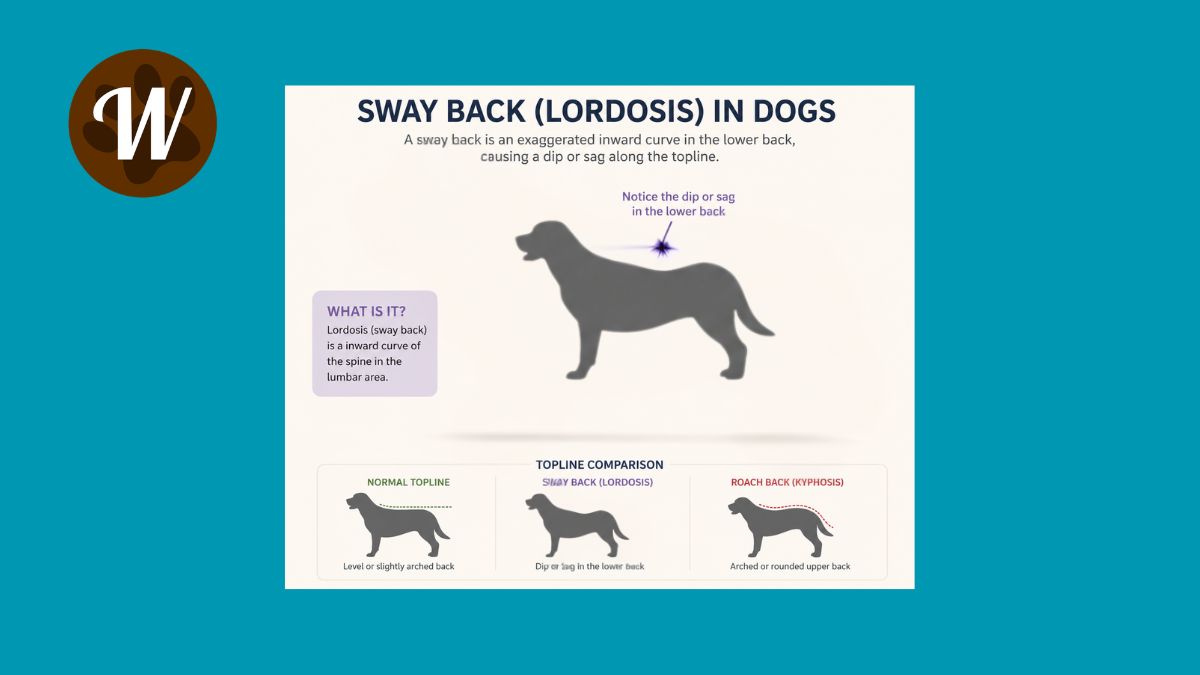
A sway back in dogs, also called lordosis, may be a posture clue linked to weakness, discomfort, spinal issues, or compensation. Learn what to watch f
Why I should understand what Lordosis is and how this might affect my dog.
Why this matters to me and the work I do to help dog guardians with their dog.
A sway back is not automatically “bad,” but it is information.
Like many posture changes, it asks us to look at the whole dog: movement, comfort, strength, age, breed, weight, behaviour, and whether the dog is changing over time.
Things I would want people to observe:
What to look for | Why it matters |
A dip through the back when standing | May be posture, conformation, muscle weakness, or compensation |
Reluctance to jump, climb stairs, or get into the car | Can be linked with spinal, hip, or joint discomfort |
Slower walks or stiffness after rest | Commonly seen with pain or degenerative joint issues |
Hind-end weakness, wobbliness, dragging toes, or knuckling | More concerning; may suggest neurological involvement |
Irritability when touched, groomed, lifted, or handled | Pain can change behaviour very quickly |
Sudden change in posture | More urgent than a long-standing body shape |
Back pain in dogs can show up as stiffness, abnormal posture, trembling, walking slowly, restlessness, appetite changes, or behaviour changes such as irritability. Cornell also notes that spinal disc problems may show as hunched posture, crying when picked up, wobbliness, rear weakness, trouble walking, or in severe cases paralysis or incontinence.
Where my behaviour-consultant brain goes — because of course it does, it brought snacks — is this: posture can influence behaviour. A dog who feels weak, sore, unstable, or guarded through the body may become more defensive, reactive, reluctant, clingy, avoidant, or irritable. Not because they are being “difficult,” but because their body may be saying, “I don’t feel safe moving that way.”
Possible contributing factors can include:
Muscle weakness or poor core/topline strength
Some dogs may sag through the back because they lack strength or are compensating elsewhere.
Age-related changes or arthritis
Degenerative joint disease can cause dogs to move differently, become slower, avoid stairs or jumping, and show discomfort in subtle ways.
Spinal disc disease or spinal discomfort
IVDD and other spinal issues can range from mild pain to serious neurological signs. Cornell notes that early intervention matters, especially if weakness, knuckling, ataxia, or paralysis appears.
Weight and conditioning
Extra weight can increase mechanical stress on the spine and joints, and PetMD lists obesity as one possible contributor to back pain in dogs.
Breed/conformation
Some dogs have body shapes that predispose them to spinal strain or disc disease. Cornell lists breeds commonly affected by IVDD, including Dachshunds, Poodles, Pekingese, Lhasa Apsos, German Shepherd Dogs, Dobermans, Beagles, and Cocker Spaniels.
When a vet check is recommended:
A dog should be assessed by a veterinarian if the sway back is new, worsening, paired with pain, stiffness, reluctance to move, behaviour change, hind-end weakness, toe dragging, wobbliness, difficulty rising, or any toileting changes. Paralysis, collapse, sudden severe pain, or loss of bladder/bowel control is urgent.
A sway back is not a diagnosis. It is a body clue. We want to understand whether your dog is compensating for weakness, discomfort, or a neurological issue.
For training and behaviour work, I would avoid high-impact activities until the dog has been assessed: no repetitive jumping, hard fetch, slippery floors, or intense twisting games. Keep movement gentle and predictable: short sniffy walks, easy scatter feeding, slow transitions, low-impact enrichment, and calm confidence-building. Cornell specifically notes that keeping dogs trim and fit and reducing repeated stairs/jumping can help reduce spinal injury risk, while walking is generally safer than leaping for thrown toys.
A polished client-facing paragraph could be:
Sway Back in Dogs: Why It Matters
A sway back, sometimes called lordosis, describes a noticeable dip or sag through a dog’s back. In some dogs, this may simply be part of their body shape, but in others it can be a clue that the dog is experiencing weakness, compensation, discomfort, or changes in how their body is moving. When we see changes in posture, we want to look at the whole dog: movement, behaviour, comfort, age, weight, and whether the posture is new or worsening. Dogs who feel sore or unstable may also become more sensitive, reactive, reluctant, or irritable. This does not mean they are being stubborn; it may mean their body is asking for help. A veterinary assessment is important if the sway back is new, increasing, or paired with stiffness, reluctance to jump, hind-end weakness, wobbliness, toe dragging, pain, or behaviour changes. Clarity first. Then we can build the right support plan.
References:
https://www.petmd.com/dog/general-health/back-pain-in-dogs?utm_source
Check out our blog post on slippery floors and why that matters to your dog: Click here.
Other blog posts: Click here
Categories: : Dog Health