Positive Dog Training & Behaviour Blog | Walkabout Canine Consulting
Unleashing your dogs potential, one concept at a time
Slippery Floors & Dogs — Why Traction Matters for Comfort, Confidence & Long-Term Health
 Sylvia Koczerzuk
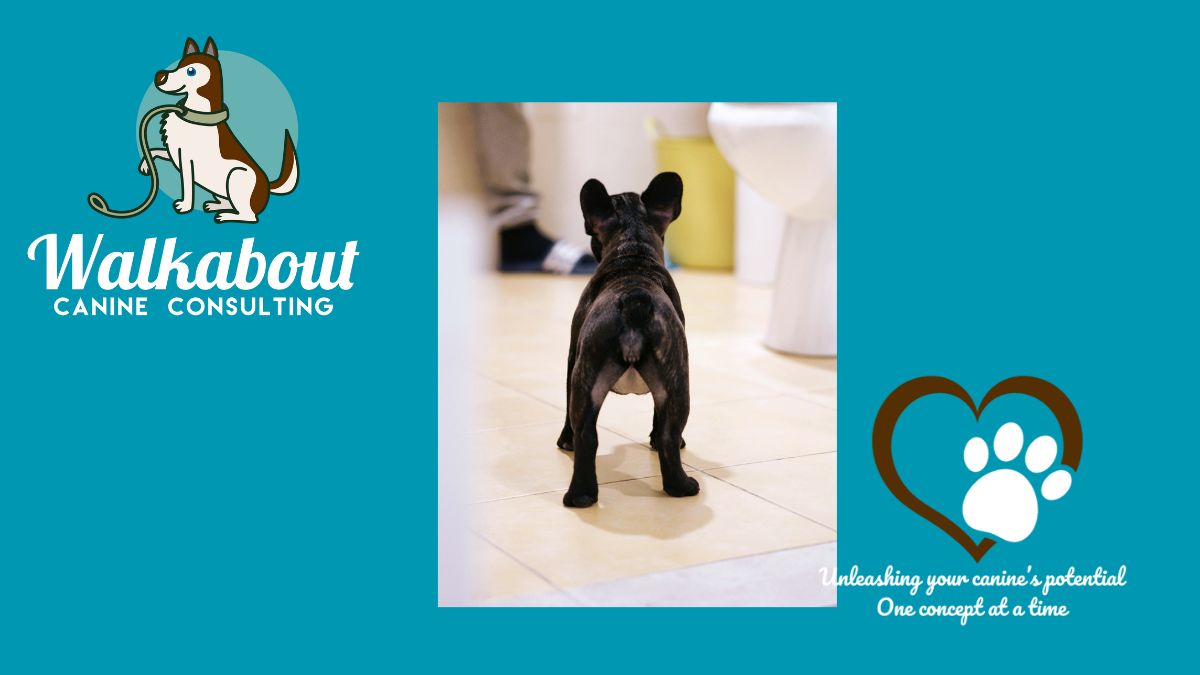
Slippery floors can impact your dog’s joints, confidence, and safety. Learn how traction affects movement, arthritis, and fear in dogs.
Slippery Floors & Dogs — Why Traction Matters for Comfort, Confidence & Long-Term Health
Have you ever watched a dog tentatively step across a shiny kitchen floor as if it’s an icy pond? Or hesitated yourself, thinking “they should just walk normally”? What looks like cautious walking is often a dog compensating for lack of traction — and over time, that can impact everything from joint health to emotional confidence.
Many of the flooring materials common in homes today — linoleum, ceramic tile, laminate, polished hardwood — simply don’t give a dog’s paws what they need to move with ease. Unlike humans, dogs don’t wear shoes with traction. Their paw pads are designed more for shock absorption and sensory feedback, not gripping smooth surfaces.
In this blog, we’ll unpack why this matters for every dog, how slippery floors can contribute to physical issues and emotional hesitation, and what guardians can do to help.
Dogs don’t have shoes. Their paw pads help with cushioning and sensory feedback, but they don’t create the same “grip” humans get from rubber soles. On smooth surfaces (laminate, tile, linoleum), many dogs compensate by changing their gait, splaying, tensing, or taking short, cautious steps—and that can snowball into physical strain and emotional hesitation.
Why traction matters for biomechanics (and not just “confidence”)
On slick floors, dogs often reduce stable paw contact and alter how they load their limbs—especially if they’re older, painful, post-op, or neurologically compromised. One peer-reviewed gait/traction paper notes that poor traction on slick surfaces is difficult for dogs with osteoarthritis, neurologic deficits, or those recovering from injury/surgery, and it describes compensations that reduce effective pad-floor contact. PMC
Trainer translation: if a dog can’t trust their footing, they’ll move like they’re walking on a skating rink in socks. And that “careful body” becomes their default.
The Mechanics: How Dogs Move (and What Traction Does)
Dogs rely on their paw pads and nails to provide a bit of friction with the ground. On textured or soft surfaces — grass, carpet, dirt — there’s enough grip that dogs can push off, change direction, and balance efficiently.
On slick surfaces, that changes:
Dogs often take shorter, tentative steps
They may splay their limbs outward to stabilize
Some shift weight forward onto shoulders rather than using the hind limbs
These subtle changes look minor in the moment, but over weeks and months they can contribute to strain and altered biomechanics — especially in puppies developing joints, and in older dogs with arthritis.
Long-Term Risks of Slippery Floors
Physical
Joint strain: Compensation for poor traction can change how force travels through joints.
Arthritis aggravation: Dogs with underlying joint wear may experience increased discomfort.
Injury risk: Slips and micro-losses of balance increase the risk of sprains and soft-tissue strain.
Developmental concerns: Some research suggests early long-term exposure to slick surfaces may be associated with higher rates of hip issues in growing dogs.¹
Emotional
Dogs can develop a fear of flooring — a real hesitation or avoidance that is reinforced when slippery surfaces feel unpredictable. A single slip can create long-lasting caution.
Slippery floors and joint development risk in young dogs
There’s veterinary research suggesting early-life exposure to slippery flooring can be a risk factor for hip dysplasia development. A study in the American Journal of Veterinary Research reported that exposure to slippery floors prior to weaning increased risk associated with hip dysplasia development. AVMA Journals
That matters because poor joint development can set the stage for earlier pain and mobility issues later in life.
What the Experts Say
Veterinary gait analysis studies highlight that dogs with arthritis, neurologic challenges, or post-surgical needs do worse on surfaces that offer poor traction.²
And client education resources in veterinary practice often emphasize checking for medical causes (pain, neurologic change) when dogs suddenly avoid slippery areas.⁴
Slippery floors + arthritis: a very un-funny combo
If a dog already has osteoarthritis (or is heading that way), slick flooring raises the risk of slips, strain, and “micro-wobbles” that aggravate discomfort.
Organizations like Canine Arthritis Management (CAM) recommend improving home traction as a foundational environmental modification for dogs with osteoarthritis — reducing slips and building confidence.³Canine Arthritis Resources and Education
And for a clinical veterinary-practice lens: guidance aimed at veterinary clinics highlights that non-slip surfaces are essential, especially for arthritic dogs, to reduce falls and injuries and improve confidence and stability. Veterinary Practice
The behaviour side: fear of floors is a real thing
Sometimes the first “behaviour problem” isn’t behaviour at all—it’s the dog trying not to fall.
A practical, welfare-minded explainer notes that when a dog suddenly refuses slick floors (or becomes anxious about them), guardians should rule out medical causes such as orthopaedic or neurologic problems—especially in older dogs. Spay Neuter Network
Training note: fear of floors can become conditioned. One slip → caution. A few more “near slips” → avoidance. Soon the dog won’t enter the kitchen, won’t approach the door, won’t follow you down the hall… and now we’ve got both a mobility and confidence problem.
What it can look like in real life (symptoms guardians miss)
Use this bullet list in your blog; it’s very “guardian-readable”:
Hesitation to enter certain rooms (tile/laminate zones)
“Bambi legs” / splaying, scrambling sounds, quick stutter steps
Taking wide turns, hugging walls, freezing at thresholds
Difficulty standing up from a down
Avoiding stairs after a slip incident
Sudden increase in irritability, startle, or “leave me alone” moments near slippery areas (pain + insecurity)
Multi-Dog Homes: Extra Considerations
In homes with more than one dog, traction matters even more.
Play intensity increases slip risk. A chase on slick floors can easily lead to a misstep or minor injury.
Compensation ripple effects. A confident dog may not slow down for a partner with traction challenges, creating tension or accidental body contact that escalates stress.
Different needs, shared space. One dog may need runner mats across the hallway while another prefers carpet softness in the living room.
A simple strategy: map the shared pathways — from beds to water bowls to doors — and give each dog predictable traction along those routes.
What to do about it (solutions that actually help)
Immediate traction fixes (fast wins)
Runners and area rugs (especially as “traction pathways” from bed → water → door)
Non-slip rug pads (because a sliding rug is just a prank, not a solution)
Yoga mats cut into strips for narrow hallways
Toe grips / paw friction aids (some dogs tolerate these well; some don’t)
A rehab-focused veterinary article notes that for improving a dog’s traction on slippery surfaces, commercial products may help but often require trial and error. Today's Veterinary Practice
Longer-term: treat the “fear of floors” like any other fear
Start on high-traction surfaces
Build confidence with stationing (mat = safe island)
Reinforce calm, slow movement (not speed)
Gradual exposure: one paw on the “new” surface → mark → reward → back to safety
If pain is suspected: vet check + rehab plan first, training second.
When to Seek Professional Input
Talk with your vet or a canine rehab specialist if:
Hesitation appears suddenly
There’s pain on rising, stiffness, limping
Avoidance increases over time
New behaviours coincides with physical changes
They can assess for arthritis, neurologic changes, or musculoskeletal conditions that make traction critical.
The Bottom line
Slippery flooring isn’t just an “oops” hazard. Over time it can shape how a dog moves, how their body loads stress, and how safe they feel in their own home—especially for puppies, seniors, arthritic dogs, and dogs recovering from injury. The goal isn’t to wrap the house in carpet; it’s to give dogs predictable traction so they can move normally and feel confident again.
References
Krontveit RI, et al. American Journal of Veterinary Research (2012). Housing/exercise risk factors for hip dysplasia; includes increased risk with slippery floors prior to weaning. AVMA Journals
Roush JK, et al. (2017). Peer-reviewed traction/gait analysis paper discussing difficulty of slick surfaces for dogs with OA/neurologic deficits/post-op and compensatory paw contact changes. PMC
Canine Arthritis Management (CAM): “Home environment modifications for dogs with OA” — emphasizes traction as a key home recommendation. Canine Arthritis Resources and Education
Veterinary Practice (2023): environmental modifications, explicitly recommends non-slip surfaces, especially for arthritic dogs. Veterinary Practice
Today’s Veterinary Practice (2024): rehab perspective; traction aids can help and often need trial and error. Today's Veterinary Practice
SpayNeuterNet (client education): fear of slippery floors; sudden onset should prompt ruling out medical causes. Spay Neuter Network