Positive Dog Training & Behaviour Blog | Walkabout Canine Consulting
Unleashing your dogs potential, one concept at a time
Resource Guarding In Multi Dog Households
 Sylvia Koczerzuk
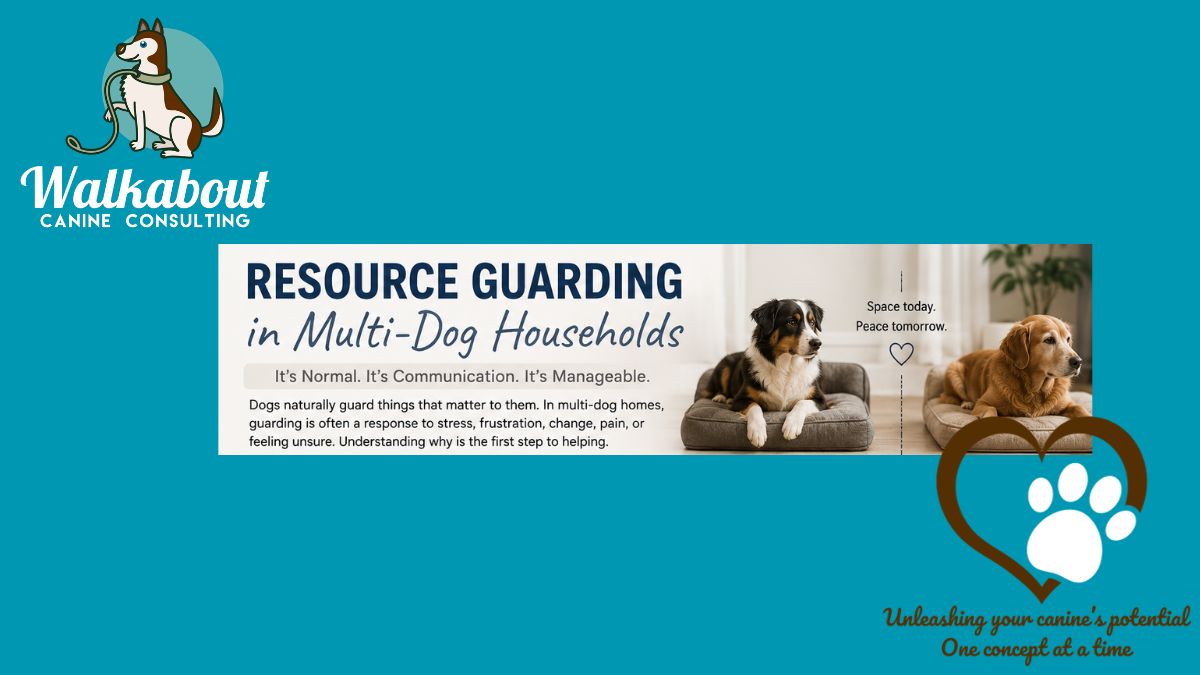
Resource guarding in multi-dog homes is often linked to stress, age differences, or change. Learn how to reduce conflict compassionately.
Resource Guarding in Multi-Dog Households: Why It Happens and How to Help
Living with multiple dogs can be deeply rewarding. It can also be complicated.
Many families imagine that adding another dog means instant friendship, constant play, and a built-in companion for their resident dog. Sometimes that happens. Often, relationships are much more nuanced.
One of the most common concerns I see in multi-dog households is resource guarding between dogs.
This may look like:
stiffening around food
hovering over toys
blocking access to couches or beds
growling near chews
hard staring
guarding human attention
snapping when another dog comes too close
tension around resting spaces
When this happens, many people panic and assume something is wrong.
I want to begin with something important:
Resource guarding between dogs is normal behaviour
Guarding resources is not abnormal.
Dogs are animals that naturally value important resources:
food
space
resting areas
toys
chews
human attention
access to safety
personal boundaries
Guarding is communication.
Your dog is saying:
“I am uncomfortable.”
“I need space.”
“This matters to me.”
“Please do not come closer.”
That does not automatically mean aggression, dominance, or a bad dog.
The real question is:
Why is this happening now?
That is where good behaviour work begins.
Stress changes behaviour
Many guarding issues are not about greed or dominance.
They are often connected to:
stress
frustration
exhaustion
poor sleep
overwhelm
environmental change
pain or discomfort
lack of predictability
A dog under stress has less tolerance.
That matters.
A dog who normally shares space well may suddenly start guarding when their stress load increases.
I often tell clients:
Behaviour lives in context.
We always want to ask:
What changed?
When did this begin?
Who is involved?
What is different in the environment?
Did a new dog join the household?
This is one of the most common reasons guarding appears.
A resident dog may suddenly find themselves living with a puppy or newly adopted dog and think:
“I did not sign up for this.”
“Who is this creature?”
“Why is it touching my bed?”
“Why is it near my food?”
“Why won’t it leave me alone?”
That response is understandable.
Many puppies are wonderful.
They are also:
impulsive
intense
persistent
bouncy
mouthy
socially clumsy
lacking in body language awareness
In other words…
A normal puppy can be a lot.
An older resident dog may feel overwhelmed by constant bouncing, grabbing, chasing, and invading personal space.
This does not mean the dogs will never get along.
It means the older dog may need support and boundaries.
Healthy boundaries matter
One of the biggest mistakes people make is forcing dogs to “work it out.”
Healthy relationships are not built through pressure.
They are built through:
safety
choice
trust
predictable routines
respect for boundaries
Not every growl is a problem.
Sometimes a growl is a healthy boundary.
A growl may be your dog saying:
“That is too much.”
“Back off.”
“I need space.”
When we punish those warnings, we risk removing communication.
I would rather dogs communicate than skip directly to snapping.
Age differences matter more than people realize
This is a huge factor in multi-dog households.
Ask yourself:
Is one dog a puppy?
Is one dog an adolescent?
Is one dog a senior?
Is one dog slowing down physically?
Does one dog want constant interaction while the other wants peace?
Large age gaps can create tension.
Examples:
Puppy + Senior Dog
The puppy wants chaos.
The senior wants sleep.
Conflict becomes predictable.
Adolescent Dog + Adult Dog
Adolescents often have:
poor impulse control
huge emotional swings
lower frustration tolerance
big feelings
selective listening
Adolescence can temporarily make dogs harder to live with.
I often tell families:
Adolescence is not just big bodies. It is big brains under construction.
That means tolerance between dogs can drop.
Newly adopted dogs need decompression
A newly adopted dog may appear calm at first, then start guarding days or weeks later.
Why?
Because survival mode can mask behaviour.
In a new home, the dog may be processing:
new people
new routines
new sounds
new smells
new dogs
new rules
new expectations
That is a lot.
Decompression matters.
Some dogs need weeks.
Some need months.
There is no universal timeline.
Ask:
Where did this dog come from?
Shelter?
Rescue?
Breeder?
Previous home?
Street environment?
Past experiences matter.
Medical issues can increase guarding
This is often overlooked.
Pain changes tolerance.
A dog in discomfort may become more protective of:
beds
couches
resting spaces
food
body handling
personal space
Medical contributors may include:
arthritis
dental pain
injury
GI discomfort
hormonal shifts
chronic pain
neurological changes
If guarding appears suddenly or worsens, medical investigation matters.
Pain changes behaviour.
What should we do?
The goal is not forcing dogs to share everything.
Dogs do not need to share every resource to live peacefully.
They need safety and predictability.
1. Use management
Management prevents rehearsal.
This includes:
Separate feeding stations
Feed dogs separately.
Use:
different rooms
crates
gates
distance
Meals should feel safe.
No hovering.
No stealing.
No pressure.
2. Create separate sleep stations
Every dog should have a place to fully rest.
This may include:
beds
crates
mats
gated rooms
quiet corners
Sleep is behaviour medicine.
Tired dogs are less resilient.
3. Protect high-value resources
High-value items often trigger guarding:
bones
chews
stuffed toys
food puzzles
Supervise or separate.
Set dogs up to succeed.
4. Respect decompression time
Not every dog wants constant social interaction.
Rest matters.
Ask:
Are the dogs getting enough downtime?
Is one dog constantly pestering another?
Is one dog unable to relax?
Too much stimulation creates stress
5. Create joy individually
This matters enormously.
Each dog should have individual time with you.
That may include:
sniff walks
training games
enrichment
cuddles
scent work
play
relaxation
Joy builds resilience.
6. Build trust with each dog
We want two things:
Dog trusts human
AND
Dogs gradually trust each other
That takes time.
Trust cannot be rushed.
Relationships cannot be forced.
I tell families:
Slow is often fast in behaviour work.
When we rush introductions or pressure closeness, conflict increases.
When we allow space and safety, trust can grow naturally.
Should dogs be forced to share?
No.
This is a common myth.
Sharing is a human value.
Dogs care more about access and safety.
Your goal is not:
“Everybody must share everything.”
Your goal is:
“Everyone feels safe enough that conflict becomes unnecessary.”
That is a very different goal.
When to get professional help
Get help if you see:
repeated growling
snapping
fights
escalating tension
guarding multiple resources
injuries
intense fear
inability to relax
Early intervention helps.
Small tension can become larger conflict if ignored
Final Thoughts
Resource guarding in multi-dog households is often a normal response to stress, frustration, environmental change, age differences, medical issues, or social pressure.
It does not automatically mean dominance.
It does not automatically mean aggression.
It often means a dog is struggling.
When we stop asking:
“How do I make them get along?”
and start asking:
“What do they need to feel safe?”
everything changes.
Healthy multi-dog relationships are built through:
management
boundaries
decompression
rest
trust
patience
compassionate guidance
Rushing relationships is rarely helpful.
Safety and trust create the best chance for harmony.
Is your multi-dog household feeling stressful?
Are you seeing resource guarding, tension, growling, or conflict between dogs?
You do not have to figure this out alone.
Book a free discovery call or explore my Resource Guarding course for practical, compassionate support.
FAQ SECTION
Is resource guarding between dogs normal?
Yes. Resource guarding between dogs can be normal behaviour involving valued resources such as food, space, toys, resting areas, or human attention.
Why is my older dog growling at my puppy?
Older dogs may feel overwhelmed by normal puppy behaviour such as bouncing, chasing, grabbing, and constant social pressure.
Can stress cause resource guarding?
Yes. Stress, frustration, lack of sleep, environmental changes, and overwhelm can reduce tolerance and increase guarding behaviour.
Should dogs be forced to share?
No. Dogs do not need to share every resource. The goal is safety, predictability, and reduced conflict.
Can medical issues cause guarding?
Yes. Pain and medical discomfort can reduce tolerance and increase guarding, especially around resting spaces and handling.
Categories: : Adolescent Dogs, dog resource guarding reason