Positive Dog Training & Behaviour Blog | Walkabout Canine Consulting
Unleashing your dogs potential, one concept at a time
Flexibility for Dogs and Humans
 Sylvia Koczerzuk
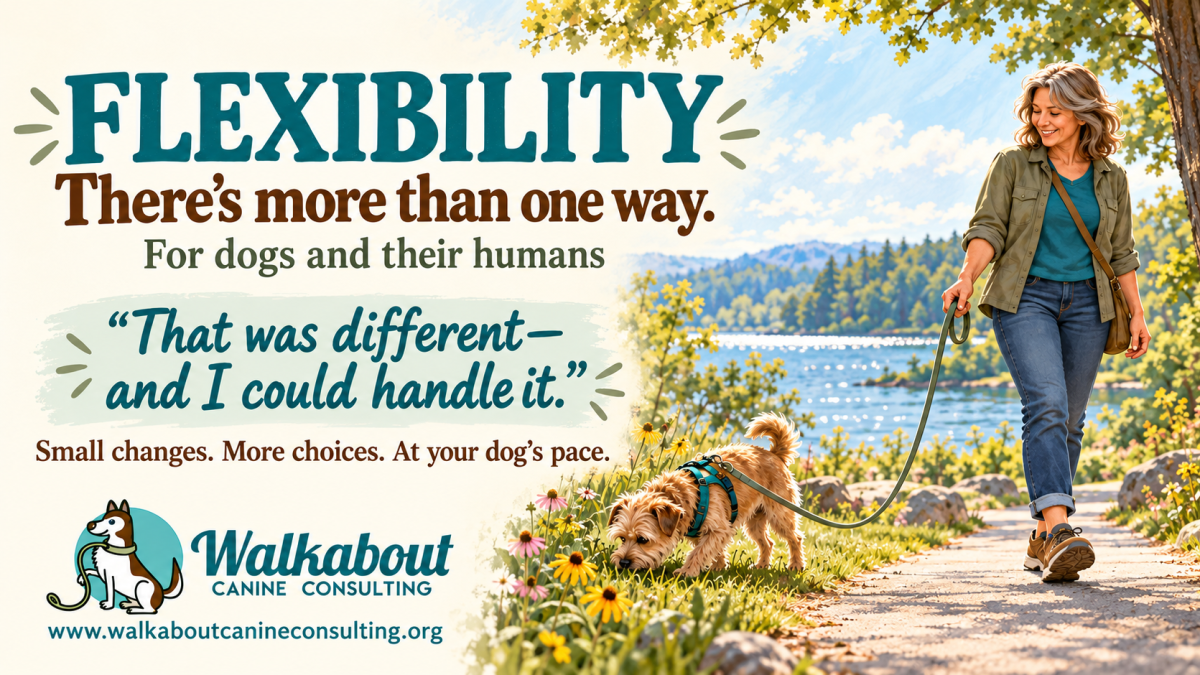
Help your dog cope with change through small, positive experiences. Learn how predictable routines, choice and gentle variety support flexible learning.
To help your dog cope with change, keep their basic routines dependable and introduce small variations in activities they already enjoy. Change one thing at a time, reward their efforts and let them pause or walk away. Building flexibility means offering manageable opportunities to try another option while paying attention to how your dog feels.
“There’s More Than One Way”: Flexibility for Dogs and Their Humans
Imagine heading to your favourite café. You already know what you’re ordering. Then you see the sign: Closed.
Can you find somewhere else and still enjoy your morning? Or does that change throw everything off?
This gives us a simple way to think about flexibility: being able to adjust when the usual plan no longer works.
Our dogs face their own versions of a closed café. Their favourite walking route is unavailable. Someone is sitting in their usual spot. It is time to finish playing and do something quieter.
These changes can be easy for some dogs and difficult for others.
Familiar things feel easier
When something has worked many times, it makes sense to try it again.
A dog who brings you a ball and gets a game learns that bringing the ball works. A person who always follows the same recipe knows what to expect.
Familiar patterns are useful. The challenge comes when we struggle to find another option.
A dog can love playing ball and still be flexible. Loving one activity does not automatically mean there is a problem. The useful question is: Can they also enjoy other activities and cope when their favourite is unavailable?
Doing something different and feeling differently are separate achievements
A dog may sit when asked while still feeling worried. A person may politely attend a party while wishing they could leave.
The behaviour we see does not tell us everything about the feeling underneath.
When helping a dog with change, we need to notice both: can they try another action, and do they appear comfortable doing it?
Start with a small change that feels manageable
Think of flexibility practice as adding another tool to a toolbox. We want our dogs to have more options available.
Try a tiny variation in something your dog already enjoys:
- A familiar food search: Place a few pieces of food slightly differently within the same easy search area.
- A familiar walk: Explore a short, quiet side path if your dog chooses to investigate.
- A familiar game: Introduce a brief, easy food search between short rounds of play, before excitement becomes difficult to manage.
Change one thing at a time. Keep success easy. Your dog should be able to pause or walk away.
These activities offer practice with small variations. They do not guarantee that your dog will cope with every bigger change.
Keep a dependable foundation
Dogs can benefit from predictable routines and gentle variety at the same time.
Keep their access to rest, food, safety and comfortable spaces reliable. Add small changes within that secure foundation.
There is no need to move their bed, interrupt their meal or take away a valued item to test how flexible they are.
If a change brings repeated frustration, avoidance or distress, make it easier. Struggling is information about the support needed.
The human end of the lead matters too
Our own flexibility might mean shortening a walk, changing our training plan or accepting that today’s success looks different from yesterday’s.
That does not mean we caused our dog’s difficulties. It means we can adjust our teaching to help them learn.
Instead of asking, “Why won’t you do this?” try asking, “What would make this easier to understand?”
Five questions to reflect on:
- Which familiar activities does my dog comfortably enjoy?
- Which small changes do they already handle well?
- What tells me they are curious, comfortable or becoming frustrated?
- Am I offering an understandable alternative when plans change?
- Can I adjust my expectations to meet the dog in front of me today?
The goal is to help your dog experience: “That was different—and I could handle it.”
What does flexibility mean in dog behaviour?
Flexibility means being able to adjust when a familiar situation changes or a usual action no longer works. In everyday life, this might involve enjoying a different walking route or moving from play to another familiar activity. Changing behaviour and becoming comfortable with change are related, but they are not the same achievement.
Does loving one activity mean my dog is inflexible?
No. Having a favourite activity, such as playing ball, does not automatically mean your dog lacks flexibility. Consider whether they can also enjoy other activities and cope when their favourite is unavailable. Preferences are normal; persistent distress deserves closer attention.
Can predictable routines and flexibility work together?
Yes. Predictable routines provide a dependable foundation. You can keep rest, meals and comfortable spaces reliable while introducing gentle variety within familiar activities. Helping a dog become more flexible does not require making daily life unpredictable.
How can I practise flexibility with my dog?
Start with one small variation in an activity your dog enjoys. Place an easy food search in a slightly different spot, or explore a quiet side path if your dog chooses. Keep the activity easy and rewarding. These experiences provide practice with variety, but they do not guarantee comfort with every bigger change.
What if my dog becomes worried or frustrated?
Reduce the challenge, offer space and return to something familiar if that helps. Avoid repeatedly testing your dog with the same difficult change. Notice what happened before the discomfort and adjust the next attempt so it is easier.
How does human flexibility help dogs?
Being flexible allows us to adjust our teaching to the dog in front of us. We might shorten a walk, simplify a game or change our expectations for that day. This helps us respond to our dog’s needs while continuing to build useful skills.
Does your dog find changes difficult? I help dog guardians understand their dog’s behaviour and create a practical road map to success, with manageable steps suited to their everyday lives.
Sylvia Koczerzuk , CDBC at Walkabout Canine Consulting offers in-person support in Kingsville, Leamington and Windsor-Essex, alongside virtual behaviour consultations.
Book a free discovery call to discuss your dog’s needs:
https://www.walkaboutcanineconsulting.org/courses/discovery-call-with-sylvia
Categories: : behaviour training