Positive Dog Training & Behaviour Blog | Walkabout Canine Consulting
Unleashing your dogs potential, one concept at a time
The Early Signs of Tension Between Dogs Most Humans Miss
 Sylvia Koczerzuk
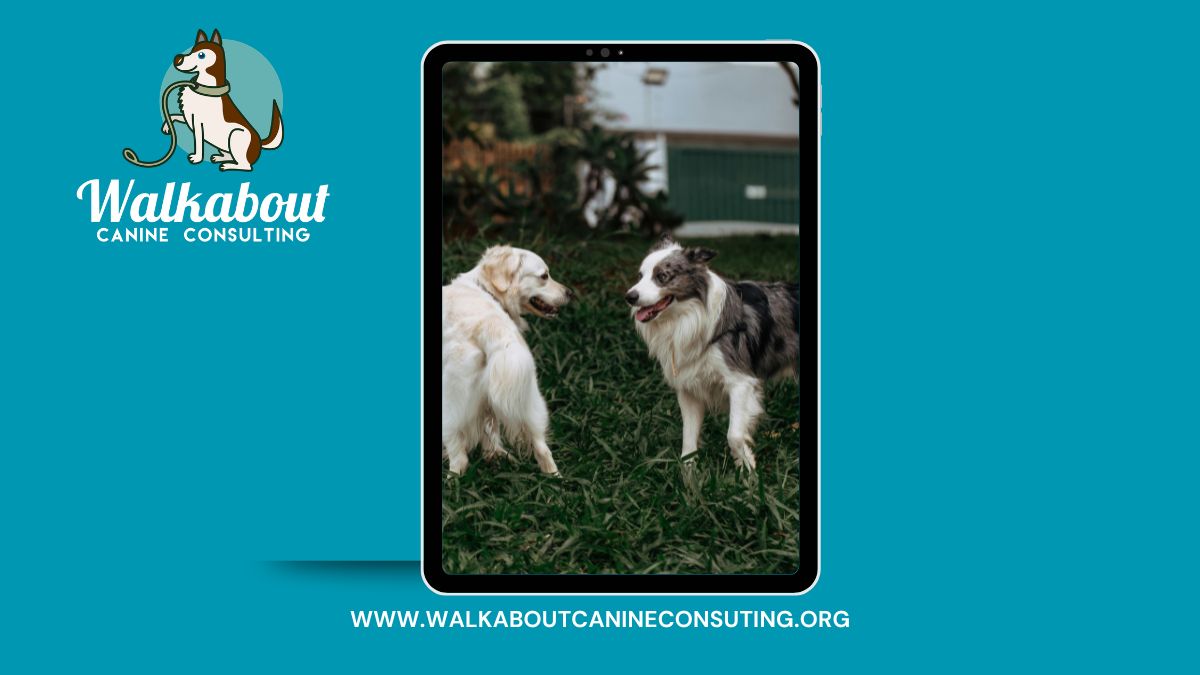
Learn the subtle early signs of tension between dogs in multi-dog homes, including stillness, staring, hovering, avoidance, and social pressure.
When dogs live together, conflict rarely appears out of nowhere.
Most of the time, there are earlier signs. Quiet signs. Easy-to-miss signs. The kind of signs that do not look dramatic, but still matter.
This is one of the biggest challenges in multi-dog households. Humans are often waiting for the obvious behaviours: growling, snapping, barking, lunging, or fighting. But dogs usually communicate long before things escalate to that level.
The problem is that their early communication can be subtle.
A dog may pause in a doorway.
They may stop moving.
They may stare.
They may hover.
They may turn away.
They may leave the area.
They may suddenly sniff the ground, blink, or lick their nose.
These are not random moments.
They are often part of the social conversation happening between dogs.
Tension Often Begins with Pressure
In many multi-dog homes, tension begins with pressure rather than open conflict.
One dog may move too directly toward another.
One may crowd a resting space.
One may block access to a doorway, a person, a couch, or a favourite resting area.
One may continue to pester while the other dog is trying to disengage.
None of this has to turn into a fight to matter.
And that is the piece so many people miss.
We tend to think everything is fine as long as nobody is growling or snapping. But dogs do not need to be openly fighting for stress and pressure to be building.
Stillness Is One of the Most Overlooked Signs
A still dog is not always a calm dog.
Sometimes stillness is simply rest. But sometimes stillness is a pause in processing. It can be uncertainty. It can be discomfort. It can be a dog holding tension quietly in their body.
If one dog suddenly becomes very still around another dog, especially in a shared space or around something important, it is worth slowing down and looking more closely at the whole picture.
Stillness can be communication.
And dogs that communicate quietly are often missed because they do not make a big scene. They may not bark, growl, or protest in ways humans easily notice. Instead, they may freeze, hold tension, and communicate in silence.
That silence still matters.
Other Early Signs of Tension Between Dogs
Some of the early signs of tension can include:
- hard staring
- hovering
- freezing
- body blocking
- closing the mouth suddenly
- moving away
- lip lifting
- reluctance to pass by another dog
- guarding access to people, furniture, beds, toys, or doorways
- repeated pestering from one dog toward another
- choosing distance more often
- struggling to settle when the other dog is nearby
Sometimes the signs are very small on their own. But when you step back and look at the pattern, they begin to tell a clearer story.
Dogs Often Give Polite Signals Before Bigger Signals
Dogs are incredibly good at trying to avoid conflict.
They often start with polite communication first.
That may look like:
- turning the head away
- curving the body
- sniffing the ground
- blinking
- walking away
- pausing
- choosing distance
These behaviours are often part of a dog saying, “I need space,” “I am not comfortable,” or “I do not want more pressure right now.”
The trouble is that humans often overlook these polite signals and only notice the louder ones later.
When polite communication does not work, dogs may need to communicate more clearly.
That is often when people say the behaviour came “out of nowhere.”
Usually, it did not.
Usually, the quieter signs were just missed.
Tight Spaces Often Magnify Tension
Some parts of the home create more pressure than others.
Doorways, hallways, kitchens, furniture, windows, gates, and feeding areas can all make social interactions feel tighter and less flexible.
Why?
Because dogs have fewer choices in those spaces.
There is less room to move away, less room to curve, and less room to communicate softly. Pressure builds faster when the environment limits options.
That is why two dogs may seem fine in one context but look much more uncomfortable in another.
Dogs learn and respond in pictures. The picture matters.
“They Get Along Most of the Time” Can Still Include Pressure
Many dogs in multi-dog households do have mixed relationships.
They may play together.
They may rest near each other.
They may move through parts of the day quite comfortably.
And they may still experience moments of pressure, tension, or reduced tolerance.
That does not mean the relationship is broken.
It means the relationship is layered.
Multi-dog living is not all-or-nothing. Dogs can enjoy each other sometimes and still need more support in certain situations.
That is why watching the details matters so much.
Why Early Signs Matter
When we notice early tension, we can do something about it before the behaviour grows.
We can:
- create more space
- reduce pressure
- interrupt rehearsals
- slow down greetings
- change the environment
- support decompression
- build calmer routines
- teach useful life skills
- help each dog feel safer in the shared home
This is where prevention lives.
Not in waiting for something dramatic to happen.
But in noticing what is happening now.
What to Watch for This Week
If you live with more than one dog, try watching for:
- where your dogs look most relaxed
- where they look most tense
- who moves toward whom
- who moves away
- where bottlenecks happen
- when stillness shows up
- whether one dog interrupts the other often
- what happens around food, toys, furniture, doorways, and people
- how quickly each dog recovers after excitement
You are not looking for perfection.
You are looking for patterns.
Patterns create clarity.
And clarity helps you make better decisions for the dogs in your home.
Final Thoughts
The early signs of tension between dogs are often quiet.
That does not make them unimportant.
In fact, those quieter signs are often where the most useful information lives. They tell us how dogs are feeling before the behaviour becomes louder, more stressful, or more dangerous.
If you have more than one dog, do not wait only for the big signs.
Watch for the subtle ones too.
Because early tension is often where prevention begins.
Call to Action
If you are noticing subtle stress, pressure, or tension between your dogs, support can help you understand what you are seeing and what to do next.
A calmer, safer multi-dog household starts with understanding the picture.
Book a discovery call to learn more about multi-dog behaviour support.
Categories: : multi dog polite dog